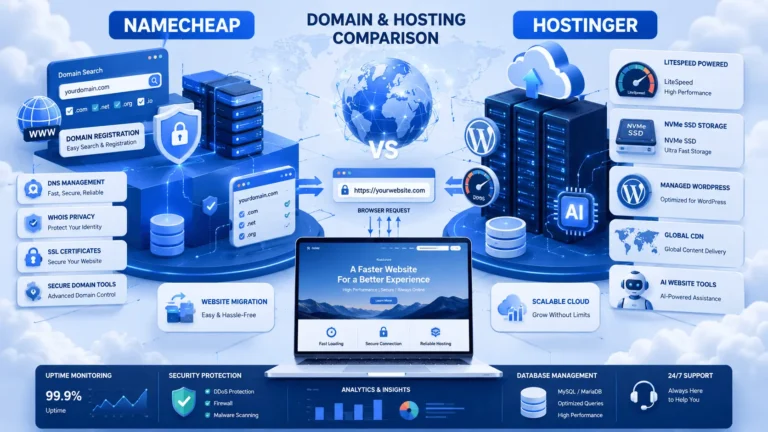


Shared Hosting vs VPS Hosting Explained in this beginner-friendly guide. Compare performance, security, pricing, and scalability to choose the right hosting.
Wondering whether shared hosting or VPS hosting is right for your website? This comprehensive guide explains the differences, compares performance, security, pricing, scalability, and helps you choose the best hosting solution for your needs.
Shared Hosting vs VPS Hosting Explained: Shared hosting places multiple websites on one server, making it affordable and ideal for beginners. VPS hosting allocates dedicated virtual resources, offering better speed, security, and scalability. Shared hosting suits small websites, while VPS hosting is better for growing businesses and high-traffic sites.
Table of Contents
ToggleIntroduction
Choosing the right hosting plan is one of the most important decisions when building a website. In this guide, Shared Hosting vs VPS Hosting Explained, you’ll learn exactly how these two popular hosting types differ and which one is the better fit for your goals.
If you’re launching a personal blog, portfolio, or small business website, shared hosting is often the most affordable place to start. However, as your website grows and attracts more visitors, you may need the improved performance, dedicated resources, and greater control that VPS hosting provides.
Understanding Shared Hosting vs VPS Hosting Explained goes beyond comparing prices. Factors such as website speed, security, uptime, scalability, resource allocation, and management all influence your site’s long-term success. Selecting the wrong hosting plan can lead to slower loading times, limited growth, and unnecessary costs, while the right choice helps your website remain fast, secure, and reliable.
In this comprehensive guide, we’ll compare every major aspect of shared hosting and VPS hosting using practical examples, easy-to-understand explanations, expert recommendations, and real-world scenarios. You’ll also discover which hosting providers are best suited for beginners, bloggers, WordPress users, businesses, WooCommerce stores, and developers.
By the end of this guide, you’ll have a clear understanding of Shared Hosting vs VPS Hosting Explained, enabling you to choose the hosting solution that best matches your website’s current needs and future growth.
Shared Hosting vs VPS Hosting Explained
Choosing between shared hosting and VPS hosting can significantly impact your website’s speed, reliability, security, and future growth. While both hosting types allow you to publish a website online, they are designed for different needs and budgets.
If you’re building your first website, shared hosting is often the most affordable and beginner-friendly option. On the other hand, if your website receives increasing traffic or runs resource-intensive applications, VPS hosting provides more power and flexibility.
In this section of Shared Hosting vs VPS Hosting Explained, we’ll explore how each hosting type works, their key differences, and when each is the right choice.
What Is Shared Hosting?
Shared hosting is a web hosting service where multiple websites share the same physical server and its resources, including CPU, RAM, storage, and bandwidth.
Think of it as living in an apartment building. Every resident has their own apartment, but everyone shares the building’s utilities and infrastructure.
How Shared Hosting Works
When a visitor accesses your website:
- The browser sends a request.
- The hosting server processes the request.
- Resources are shared among all websites hosted on that server.
- Your webpage is delivered to the visitor.
Since many websites share the same server, heavy resource usage by one website can sometimes affect the performance of others.
Shared Hosting Advantages
- Affordable pricing
- Beginner-friendly
- No server management required
- Easy control panel (usually cPanel)
- One-click WordPress installation
- Free SSL on many plans
- Email hosting included
- Automatic updates from many providers
Shared Hosting Disadvantages
- Shared CPU and RAM
- Limited scalability
- Slower performance during traffic spikes
- Less server control
- Limited customisation
- Greater impact from neighbouring websites (“noisy neighbours”)
Best For
Shared hosting is ideal for:
- Personal blogs
- Portfolio websites
- Small businesses
- Landing pages
- Local company websites
- Students
- Beginners learning WordPress
Expert Tip
If your website receives fewer than 15,000–30,000 monthly visitors and doesn’t run complex applications, shared hosting is usually sufficient.
Recommended Shared Hosting Providers
If you’re looking for reliable shared hosting, consider these options based on your needs:
| Provider | Best For | Highlights |
|---|---|---|
| Namecheap | Budget-conscious users | Affordable plans, free website migration, beginner-friendly dashboard |
| Hostinger | Beginners & WordPress | LiteSpeed servers, NVMe SSD storage, excellent value |
| Bluehost | WordPress beginners | Official WordPress recommendation, simple setup |
| WebHostingHub | Small businesses | Easy management, business-focused features |
What Is VPS Hosting?
VPS stands for Virtual Private Server.
Instead of sharing every server resource with dozens or hundreds of websites, a VPS divides one physical server into several isolated virtual servers. Each virtual server receives dedicated CPU, RAM, storage, and operating system resources.
Think of VPS hosting as owning a townhouse instead of renting an apartment. You still share the overall property (the physical server), but your allocated space and resources are private.
How VPS Hosting Works
Using virtualisation technology:
- One physical server is split into multiple virtual servers.
- Each VPS operates independently.
- Every VPS has dedicated resources.
- Users often have root or administrative access.
- Server performance is isolated from other customers.
This means another website’s traffic or activity is far less likely to affect your website’s performance.
VPS Hosting Advantages
- Dedicated CPU and RAM
- Faster loading speeds
- Better uptime
- Greater security
- Root access
- Custom software installation
- Higher scalability
- Suitable for growing websites
- Handles traffic spikes more effectively
VPS Hosting Disadvantages
- Higher cost than shared hosting
- More technical knowledge required (unless managed)
- Server maintenance responsibilities for unmanaged plans
- Greater configuration complexity
Best For
VPS hosting is suitable for:
- Growing businesses
- WooCommerce stores
- Membership websites
- High-traffic blogs
- SaaS applications
- Agencies
- Developers
- Custom web applications
Expert Tip
Choose a managed VPS if you don’t want to handle server updates, security patches, or maintenance yourself.
| Provider | Best For | Highlights |
|---|---|---|
| InMotion Hosting | Business VPS | High performance, managed VPS options, excellent support |
| Hostinger VPS | Developers | Dedicated resources, custom configurations |
| Bluehost VPS | Growing WordPress sites | Easy management and scalable plans |
Shared Hosting vs VPS Hosting Explained: Key Differences
Although both hosting types serve websites over the internet, they differ in several important areas.
| Feature | Shared Hosting | VPS Hosting |
|---|---|---|
| Resources | Shared | Dedicated virtual resources |
| Performance | Good | Excellent |
| Speed | Moderate | Faster |
| Security | Standard | Higher |
| Scalability | Limited | Excellent |
| Root Access | No | Yes (usually) |
| Customisation | Limited | Extensive |
| Traffic Handling | Moderate | High |
| Cost | Low | Medium to High |
| Technical Skill | Minimal | Moderate (less for managed VPS) |
Performance Comparison
Performance is one of the biggest deciding factors in Shared Hosting vs VPS Hosting Explained.
Shared Hosting Performance
Because server resources are shared among multiple users:
- CPU availability fluctuates.
- RAM is limited.
- High-traffic neighbours may impact performance.
- Peak-hour slowdowns are possible.
However, premium shared hosting providers now use technologies such as:
- NVMe SSD storage
- LiteSpeed Web Server
- HTTP/3
- Server-side caching
- Integrated CDN support
These improvements make modern shared hosting much faster than it was a few years ago.
VPS Performance
VPS hosting offers:
- Guaranteed CPU allocation
- Dedicated RAM
- Consistent performance
- Better handling of concurrent visitors
- Lower latency
- Faster database queries
- Improved application responsiveness
For websites with frequent traffic spikes or resource-heavy applications, VPS hosting delivers a noticeable performance advantage.
Security Comparison
Security is another critical consideration when choosing a hosting plan.
Shared Hosting Security
Most reputable providers include:
- Free SSL certificates
- Malware scanning
- Firewalls
- DDoS protection
- Automated backups (on selected plans)
Because the server environment is shared, providers implement isolation measures to minimise risks between accounts. Choosing a trusted host is essential for maintaining a secure environment.
If your website processes sensitive customer information or online payments, additional security measures and careful configuration are recommended regardless of hosting type.
VPS Security
With VPS hosting, you benefit from:
- Isolated virtual environments
- Dedicated resources
- Greater control over security settings
- Ability to configure custom firewalls
- Installation of advanced security software
- Better compliance options for business applications
Managed VPS plans often include operating system updates, security monitoring, and proactive maintenance, reducing administrative overhead while enhancing protection.
Pricing Comparison
For many website owners, price is the first factor they consider. However, choosing the cheapest hosting isn’t always the best long-term decision. As your website grows, upgrading to a more powerful hosting plan may become necessary.
Shared Hosting Pricing
Shared hosting is the most budget-friendly option and is perfect for beginners.
Typical starting price:
- £1–£8/month (varies by provider and promotional offers)
Common features include:
- Free SSL certificate
- One-click WordPress installation
- Email accounts
- cPanel or custom control panel
- Daily or weekly backups (depending on the provider)
- Free website migration (on selected plans)
Recommended for Budget Users
VPS Hosting Pricing
VPS hosting costs more because you receive dedicated virtual resources.
Typical starting price:
- £8–£60+/month
Managed VPS plans cost more than unmanaged VPS plans because the hosting provider handles updates, monitoring, backups, and server maintenance.
Resource Allocation
Shared Hosting
Resources are shared among multiple websites:
- Shared CPU
- Shared RAM
- Shared storage I/O
- Shared bandwidth allocation
Performance may fluctuate depending on overall server usage.
VPS Hosting
Each VPS receives dedicated resources such as:
- Dedicated CPU cores
- Dedicated RAM
- Dedicated SSD/NVMe storage allocation
- Dedicated operating environment
This ensures more consistent performance even during traffic spikes.
Scalability Comparison
One of the biggest advantages highlighted in Shared Hosting vs VPS Hosting Explained is scalability.
| Feature | Shared Hosting | VPS Hosting |
|---|---|---|
| Upgrade Options | Limited | Excellent |
| RAM Expansion | No | Yes |
| CPU Upgrade | No | Yes |
| Storage Upgrade | Limited | Easy |
| Handles Traffic Growth | Moderate | Excellent |
Expert Insight
If you expect your website to grow significantly within the next year, starting with a scalable VPS plan can save time and reduce migration challenges later.
Ease of Management
Shared Hosting
Shared hosting is designed for users with little or no technical experience.
Most providers include:
- User-friendly dashboard
- One-click installers
- Automatic updates
- Automatic backups
- Email management
- Domain management
No server administration is required.
VPS Hosting
VPS hosting offers more control but may require additional knowledge.
Depending on the plan, you may manage:
- Operating system updates
- Firewall rules
- Server optimisation
- Security patches
- Software installation
- Command-line administration
Managed VPS hosting reduces these responsibilities by handling most maintenance tasks for you.
Shared Hosting vs VPS Hosting Explained: Pros & Cons
Shared Hosting
Pros
- Affordable pricing
- Beginner-friendly
- Easy WordPress installation
- Low maintenance
- Free SSL with many plans
- Good for small websites
Cons
- Shared resources
- Limited performance
- Lower scalability
- Less customisation
- Performance can be affected by other websites on the server
VPS Hosting
Pros
- Dedicated virtual resources
- Faster website speed
- Better uptime
- Improved security
- Greater scalability
- Root access
- Better for growing businesses
Cons
- Higher monthly cost
- Requires more technical knowledge (unless managed)
- More server management responsibilities for unmanaged plans
Common Mistakes to Avoid
Many website owners make avoidable hosting mistakes. Here are some of the most common:
- Choosing hosting based solely on the lowest price.
- Ignoring future traffic growth.
- Overlooking backup policies.
- Forgetting about SSL certificates.
- Selecting unmanaged VPS without the necessary technical skills.
- Paying for resources you don’t yet need.
- Not monitoring website performance after launch.
- Choosing a host without reliable customer support.
Real-World Use Cases
Personal Blog
Recommended Hosting:
Shared Hosting
Reason:
- Low traffic
- Budget-friendly
- Easy to manage
Recommended provider:
Small Business Website
Recommended Hosting:
Shared Hosting (initially), with the option to upgrade as traffic grows.
Recommended provider:
WooCommerce Store
Recommended Hosting:
Managed VPS
Reason:
- Faster checkout
- Better database performance
- Higher security
- Improved handling of traffic spikes
Recommended provider:
Agency Website
Recommended Hosting:
Managed VPS
Reason:
- Multiple client websites
- Better scalability
- Enhanced resource isolation
Developer Projects
Recommended Hosting:
VPS Hosting
Benefits:
- Root access
- Custom software installation
- Development environments
- Greater flexibility
Hosting Comparison Table
| Provider | Starting Price* | Performance | Storage | Free Domain | Free SSL | Support | Best For | Rating |
|---|---|---|---|---|---|---|---|---|
| Namecheap | Budget-friendly | Good | SSD/NVMe (plan-dependent) | Yes (selected plans) | Yes | 24/7 Live Chat | Beginners & Personal Sites | ⭐⭐⭐⭐☆ (4.5/5) |
| Hostinger | Budget-friendly | Excellent | NVMe SSD | Yes (selected plans) | Yes | 24/7 Live Chat | Beginners & WordPress | ⭐⭐⭐⭐⭐ (4.8/5) |
| Bluehost | Mid-range | Excellent | SSD | Yes | Yes | 24/7 Support | WordPress & Small Business | ⭐⭐⭐⭐☆ (4.7/5) |
| WebHostingHub | Mid-range | Good | SSD | Yes (selected plans) | Yes | 24/7 Support | Small Businesses | ⭐⭐⭐⭐☆ (4.4/5) |
| InMotion Hosting | Premium | Excellent | NVMe SSD | Yes (selected plans) | Yes | 24/7 US-Based Support | Business & VPS | ⭐⭐⭐⭐⭐ (4.8/5) |
Which Hosting Is Best for You?
| User Type | Recommended Hosting | Suggested Provider |
|---|---|---|
| Beginners | Shared Hosting | Hostinger |
| Bloggers | Shared Hosting | Namecheap or Hostinger |
| WordPress Users | Shared Hosting / Managed VPS | Bluehost |
| WooCommerce Stores | Managed VPS | InMotion Hosting |
| Small Businesses | Shared Hosting → VPS as needed | Bluehost |
| Growing Businesses | VPS Hosting | InMotion Hosting |
| Developers | VPS Hosting | Hostinger VPS |
Shared Hosting vs VPS Hosting Explained: Which Should You Choose?
Watch a practical comparison of shared hosting and VPS hosting to understand server resources, performance, security, pricing, scalability, and when it’s the right time to upgrade. Pairing this visual walkthrough with the information in this guide can help you make a more confident hosting decision.
Frequently Asked Questions (FAQ)
1. What is the biggest difference between shared hosting and VPS hosting?
The main difference is resource allocation. Shared hosting uses a common pool of server resources, while VPS hosting provides dedicated virtual resources, resulting in more consistent performance and greater flexibility.
2. Is shared hosting suitable for WordPress?
Yes. Shared hosting is an excellent choice for most new WordPress websites, especially blogs, portfolios, and small business sites with moderate traffic.
3. When should I upgrade from shared hosting to VPS?
Consider upgrading when your website experiences sustained traffic growth, slower loading times, or requires more server control and dedicated resources.
4. Is VPS hosting faster than shared hosting?
Generally, yes. VPS hosting typically delivers faster and more consistent performance because dedicated resources are allocated to your virtual server.
5. Which hosting is better for WooCommerce?
Managed VPS hosting is often the better option for WooCommerce stores due to improved performance, security, and scalability for handling online transactions.
6. Do I need technical knowledge to use VPS hosting?
Not necessarily. Managed VPS hosting is designed to minimise technical responsibilities, while unmanaged VPS plans require more server administration skills.
7. Can I upgrade from shared hosting to VPS later?
Yes. Most reputable hosting providers offer upgrade paths that allow you to move from shared hosting to VPS as your website grows.
8. Does VPS hosting improve website security?
VPS hosting provides better isolation and greater control over security settings, but overall security also depends on proper configuration, updates, and strong passwords.
9. Which hosting is more cost-effective?
Shared hosting is more cost-effective for new or low-traffic websites. VPS hosting offers better value for growing websites that need higher performance and scalability.
10. Which hosting should beginners choose?
For most beginners, shared hosting is the recommended starting point because it is affordable, easy to manage, and provides all the essential features needed to launch a website.
Conclusion
Choosing between Shared Hosting vs VPS Hosting Explained ultimately comes down to your website’s current needs, expected growth, and budget.
If you’re launching a personal blog, portfolio, or small business website, shared hosting is the most practical starting point. It’s affordable, beginner-friendly, and includes the essential tools needed to get your website online quickly. Modern shared hosting plans from reputable providers now offer NVMe SSD storage, free SSL certificates, automatic WordPress installation, and reliable uptime, making them an excellent choice for many users.
However, if your website is growing rapidly, handling high traffic, running an online store, or requiring custom server configurations, VPS hosting is the better long-term investment. With dedicated virtual resources, improved performance, stronger security, and greater scalability, VPS hosting provides the stability and flexibility needed for demanding websites.
There isn’t a single hosting solution that’s best for everyone. Instead, choose a hosting plan that matches your current requirements while leaving room for future growth. Starting with the right provider also makes upgrading much easier as your website expands.
At QYUSE, our recommendation is simple:
- Choose Shared Hosting if you’re a beginner, blogger, freelancer, or running a small business website.
- Choose VPS Hosting if you expect steady growth, operate a WooCommerce store, manage multiple websites, or need greater control over your server environment.
Whichever option you choose, prioritise reliable performance, responsive customer support, regular backups, strong security, and a straightforward upgrade path. These factors will have a greater impact on your website’s long-term success than price alone.
Recommended Hosting Providers
🌟 Best Overall for Beginners
Hostinger
- Excellent value
- NVMe SSD storage
- LiteSpeed Web Server
- Free SSL
- Easy-to-use control panel
🌟 Best for WordPress
Bluehost
- Beginner-friendly
- WordPress-focused
- One-click installation
- Reliable support
🌟 Best Budget Hosting
Namecheap
- Affordable plans
- Free website migration
- User-friendly dashboard
🌟 Best VPS & Business Hosting
InMotion Hosting
- High-performance VPS
- Managed VPS options
- Excellent business features
🌟 Best Small Business Hosting
WebHostingHub
- Business-friendly features
- Easy website management
Website Security Recommendation
No matter which hosting provider you choose, always protect your website with SSL encryption.
WordPress Theme Recommendation
Looking for a professional website design?
Related Articles (QYUSE):
- Bluehost vs Hostinger: Which Is Better?
- Types of Web Hosting
- How Does Website Hosting Work?
- Web Hosting Namecheap vs Hostinger: Domain & Hosting Comparison?
- Difference Between Domain and Hosting
- How to Create a WordPress Website
- Best Managed Cloud Hosting
- Best Hosting for E-commerce Website
- Cheapest NVMe SSD Hosting
- Web Hosting Price Comparison
- Best Developer Friendly VPS Hosting
- Website Speed Optimization Guide
- WordPress Security Guide
- Optimized Elementor Website Hosting
Recommended External Resources
- WordPress: https://wordpress.org/
- Google Search Central: https://developers.google.com/search
- Google web.dev: https://web.dev/
- Let’s Encrypt: https://letsencrypt.org/
- PHP: https://www.php.net/