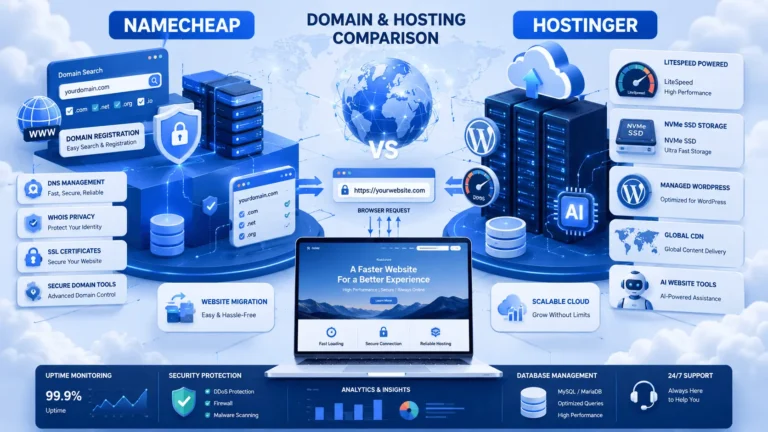


Learn the Types of Web Hosting and discover which hosting is best for your website. Compare shared, VPS, cloud, dedicated, and WordPress hosting today.
Understanding the different Types of Web Hosting is the first step toward building a fast, secure, and reliable website. This complete guide explains every hosting type, compares their pros and cons, and helps you choose the best hosting provider for your needs.
The user wants to understand the different Types of Web Hosting, their differences, advantages, disadvantages, and which hosting solution is best for a specific website or business.
Types of web hosting include Shared Hosting, VPS Hosting, Dedicated Hosting, Cloud Hosting, WordPress Hosting, Managed Hosting, Reseller Hosting, and Colocation Hosting. Each hosting type offers different levels of performance, security, scalability, and pricing, making them suitable for beginners, businesses, developers, and enterprise websites.
Table of Contents
ToggleIntroduction
Choosing the right Types of Web Hosting is one of the most important decisions you’ll make when creating a website. Whether you’re launching a personal blog, an online portfolio, a business website, or a growing eCommerce store, your hosting directly affects your site’s speed, security, uptime, scalability, and overall user experience.
Many beginners assume that all hosting services are the same. In reality, there are several Types of Web Hosting, each designed for different needs and budgets. A simple blog may perform perfectly on Shared Hosting, while a rapidly growing online business often requires Cloud Hosting or a Dedicated Server to maintain fast performance and high reliability.
Understanding these hosting options before purchasing a plan can save you money, improve your website’s performance, and reduce future migration headaches. It also helps you choose a hosting provider that aligns with your technical skills, expected traffic, and long-term growth goals.
In this comprehensive guide, you’ll learn the most popular Types of Web Hosting, how each one works, their advantages and disadvantages, real-world use cases, and practical recommendations for beginners, bloggers, WordPress users, developers, businesses, and eCommerce stores. You’ll also find an in-depth hosting comparison table featuring popular providers such as Namecheap, Hostinger, Bluehost, WebHostingHub, and InMotion Hosting to help you make an informed decision.
By the end of this guide, you’ll confidently understand which hosting solution is the best fit for your website today—and how to choose one that can grow with your needs tomorrow.
What Are Types of Web Hosting?
Before purchasing a hosting plan, it’s essential to understand the different Types of Web Hosting available today. Web hosting is a service that stores your website’s files, databases, images, and applications on a server connected to the internet. Whenever someone visits your website, the hosting server delivers your content to their browser.
Not all websites have the same requirements. A personal portfolio receiving a few hundred visitors each month doesn’t need the same infrastructure as a high-traffic eCommerce store processing thousands of orders daily. That’s why hosting providers offer multiple hosting plans designed for different levels of performance, scalability, security, and budget.
The most common Types of Web Hosting include:
- Shared Hosting
- VPS Hosting
- Dedicated Hosting
- Cloud Hosting
- WordPress Hosting
- Managed Hosting
- Reseller Hosting
- Colocation Hosting
Each hosting type has its own strengths and limitations. Understanding them helps you invest wisely and avoid expensive migrations later.
Why Choosing the Right Type of Web Hosting Matters
Selecting the appropriate Types of Web Hosting affects much more than simply getting your website online.
A good hosting plan influences:
- Website speed
- Search engine rankings
- User experience
- Security
- Server uptime
- Business growth
- Scalability
- Maintenance costs
Poor hosting often results in:
- Slow loading pages
- Frequent downtime
- Lost visitors
- Lower Google rankings
- Reduced conversions
- Security vulnerabilities
For most beginners, starting with an affordable plan is sensible, but it’s equally important to choose a provider that allows seamless upgrades as your website grows.
Shared Hosting
What Is Shared Hosting?
Shared Hosting is the most affordable and beginner-friendly option among all Types of Web Hosting. Multiple websites share the same physical server and its resources, including CPU, RAM, bandwidth, and storage.
Because server costs are divided among many users, Shared Hosting offers very low monthly prices, making it ideal for individuals and small businesses.
How Shared Hosting Works
Imagine living in an apartment building.
Each resident has their own apartment, but everyone shares the building’s infrastructure such as elevators, parking, electricity systems, and security.
Shared Hosting works the same way.
Your website has its own files and database, but shares server resources with many other websites.
Advantages
- Lowest cost
- Beginner friendly
- Easy control panel
- One-click WordPress installation
- Free SSL on many plans
- Email hosting included
- Minimal technical knowledge required
Disadvantages
- Limited server resources
- Slower during traffic spikes
- Less customization
- Performance depends on neighboring websites
Best For
- Personal blogs
- Portfolio websites
- Small businesses
- Startup websites
- Students
- Beginners
Expert Tip
If your website receives fewer than 15,000 monthly visitors, Shared Hosting is usually sufficient.
Recommended Provider
👉 Start with Hostinger
Affordable pricing, excellent speed, beginner-friendly dashboard, and reliable uptime make Hostinger one of the best Shared Hosting providers.
VPS Hosting
What Is VPS Hosting?
Virtual Private Server (VPS) Hosting divides one physical server into multiple virtual servers. Each user receives dedicated resources that are isolated from others.
Unlike Shared Hosting, your website isn’t affected by neighboring websites consuming excessive resources.
How VPS Hosting Works
Think of VPS as owning a townhouse instead of renting an apartment.
You still share the building’s structure, but your living space, utilities, and resources are dedicated exclusively to you.
Advantages
- Better performance
- Dedicated resources
- Greater flexibility
- Root access
- Better security
- Improved scalability
- Faster websites
Disadvantages
- Higher cost
- Requires technical knowledge
- Server management responsibilities
Best For
- Growing websites
- Medium-sized businesses
- WooCommerce stores
- Agencies
- Developers
- Membership websites
Real Use Case
A WordPress website receiving 50,000 monthly visitors can significantly improve speed and stability after upgrading from Shared Hosting to VPS Hosting.
Expert Tip
Choose managed VPS if you’re unfamiliar with Linux server administration.
Recommended Provider
👉 Get InMotion Hosting
https://qyuse.com/inmotionhosting
Excellent VPS performance, NVMe storage, reliable uptime, and strong developer tools.
Dedicated Hosting
What Is Dedicated Hosting?
Dedicated Hosting gives you an entire physical server exclusively for your website.
No other customers share your hardware.
You control every aspect of the server, including:
- CPU allocation
- RAM
- Operating system
- Software installation
- Security configuration
- Performance optimization
Advantages
- Maximum speed
- Highest security
- Full customization
- Unlimited scalability
- Excellent uptime
- Enterprise-level performance
Disadvantages
- Expensive
- Requires server administration
- Overkill for small websites
Best For
- Enterprise businesses
- Large eCommerce stores
- SaaS platforms
- High-traffic websites
- Government portals
- Financial institutions
Expert Tip
Dedicated Hosting becomes worthwhile when your website regularly exceeds hundreds of thousands of monthly visitors or runs mission-critical applications.
Cloud Hosting
What Is Cloud Hosting?
Cloud Hosting is one of the fastest-growing Types of Web Hosting because it uses multiple interconnected servers instead of relying on a single physical machine.
If one server experiences issues, another automatically takes over.
This significantly improves uptime and reliability.
How Cloud Hosting Works
Instead of storing your website on one server, Cloud Hosting distributes resources across an entire network.
Benefits include:
- Automatic scaling
- High availability
- Better redundancy
- Improved disaster recovery
Advantages
- Excellent uptime
- Fast performance
- Automatic scalability
- Flexible pricing
- High reliability
- Better traffic handling
Disadvantages
- Pricing may fluctuate
- Slightly more complex
- Advanced configurations for developers
Best For
- Fast-growing businesses
- Large blogs
- News websites
- SaaS applications
- High-traffic stores
- International audiences
Real Example
An online store experiencing massive traffic during Black Friday can automatically scale server resources using Cloud Hosting without crashing.
WordPress Hosting
What Is WordPress Hosting?
WordPress Hosting is specifically optimized for WordPress websites.
Unlike generic hosting plans, WordPress Hosting includes server configurations designed to maximize WordPress performance.
Common features include:
- One-click installation
- Automatic updates
- WordPress caching
- Malware scanning
- Daily backups
- Enhanced security
Advantages
- Optimized speed
- Better security
- Easier management
- Automatic maintenance
- Excellent compatibility
Disadvantages
- Primarily designed for WordPress
- Less flexibility for non-WordPress applications
Best For
- Bloggers
- Affiliate marketers
- Business websites
- WooCommerce stores
- Agencies
Recommended Provider
👉 Get Bluehost
Bluehost offers officially recommended WordPress hosting with beginner-friendly tools, excellent support, and one-click WordPress installation.
Managed Hosting
What Is Managed Hosting?
Managed Hosting means your hosting company handles most technical tasks, including:
- Software updates
- Security patches
- Monitoring
- Backups
- Server optimization
- Performance tuning
This allows website owners to focus on content and business growth rather than server maintenance.
Advantages
- No server administration
- Enhanced security
- Automatic updates
- Daily backups
- Professional support
- Better performance
Disadvantages
- Higher monthly cost
- Limited server customization
Best For
- Business owners
- Agencies
- Busy bloggers
- Non-technical users
- Growing companies
Reseller Hosting
What Is Reseller Hosting?
Reseller Hosting allows you to purchase server resources and sell hosting plans under your own brand.
The hosting provider manages the infrastructure while you manage customers.
Advantages
- Start a hosting business
- White-label branding
- Multiple customer accounts
- Recurring revenue
- Easy management
Disadvantages
- Customer support responsibilities
- Business management required
Best For
- Freelancers
- Web designers
- Agencies
- Entrepreneurs
Colocation Hosting
What Is Colocation Hosting?
Colocation Hosting allows businesses to own their physical servers while renting space inside a professional data center.
The data center provides:
- Power
- Cooling
- Internet connectivity
- Physical security
- Fire protection
- Network redundancy
You remain responsible for maintaining your own server hardware.
Advantages
- Full hardware ownership
- Enterprise security
- Reliable infrastructure
- Better network connectivity
Disadvantages
- High upfront costs
- Requires experienced IT staff
- Hardware maintenance remains your responsibility
Best For
- Large enterprises
- Government organizations
- Financial institutions
- Organizations with strict compliance requirements
Linux Hosting vs Windows Hosting
Understanding the operating system behind your hosting environment is another important step when comparing Types of Web Hosting.
| Feature | Linux Hosting | Windows Hosting |
|---|---|---|
| Cost | Lower | Higher |
| Performance | Excellent | Good |
| PHP Support | Excellent | Supported |
| WordPress | Excellent | Supported |
| ASP.NET | No | Yes |
| Ease of Use | Excellent | Good |
| Popularity | Very High | Moderate |
Choose Linux Hosting If
- You use WordPress
- You use PHP
- You want lower costs
- You need better performance
Choose Windows Hosting If
- You use ASP.NET
- You need Microsoft SQL Server
- Your application requires Windows technologies
Managed vs Unmanaged Hosting
Another important comparison among modern Types of Web Hosting is whether your server is managed or unmanaged.
| Managed Hosting | Unmanaged Hosting |
|---|---|
| Automatic updates | Manual updates |
| Daily backups | User responsibility |
| Security monitoring | Self-managed |
| Beginner friendly | Advanced users |
| Technical support | Limited server support |
| Higher price | Lower price |
Choose Managed Hosting If
- You’re new to hosting
- You run a business website
- You want peace of mind
- You don’t manage servers
Choose Unmanaged Hosting If
- You’re a developer
- You know Linux
- You want full server control
- You need maximum customization
Expert Tips Before Buying Web Hosting
- Choose scalable hosting so upgrades are easy.
- Always prioritize uptime (99.9% or higher).
- Prefer NVMe SSD storage for better performance.
- Ensure free SSL certificates are included.
- Verify backup frequency before purchasing.
- Read renewal pricing, not just introductory offers.
- Check customer support availability (24/7 is ideal).
- Consider your expected traffic over the next 12–24 months to avoid frequent migrations.
Hosting Comparison Table
The table below compares five popular hosting providers based on features that matter most when choosing among different Types of Web Hosting.
| Starting Price* | Performance | Storage | Free Domain | Free SSL | Support | Best For | Overall Rating | |
|---|---|---|---|---|---|---|---|---|
| Hostinger | Budget-friendly | ⭐⭐⭐⭐⭐ | NVMe SSD | ✅ Selected Plans | ✅ | 24/7 Live Chat | Beginners, Bloggers, Small Business | ⭐⭐⭐⭐⭐ (4.9/5) |
| Bluehost | Budget-friendly | ⭐⭐⭐⭐☆ | SSD | ✅ First Year | ✅ | 24/7 Phone & Chat | WordPress Websites | ⭐⭐⭐⭐☆ (4.8/5) |
| Namecheap | Affordable | ⭐⭐⭐⭐☆ | SSD | Optional | ✅ | 24/7 Live Chat | Personal Websites & Domains | ⭐⭐⭐⭐☆ (4.7/5) |
| InMotion Hosting | Mid-range | ⭐⭐⭐⭐⭐ | NVMe SSD | ✅ Selected Plans | ✅ | 24/7 Expert Support | Businesses & Developers | ⭐⭐⭐⭐⭐ (4.9/5) |
| WebHostingHub | Affordable | ⭐⭐⭐⭐☆ | SSD | ✅ | ✅ | 24/7 Support | Small Business Websites | ⭐⭐⭐⭐☆ (4.6/5) |
Feature Comparison
| Feature | Shared | VPS | Cloud | Dedicated | WordPress |
|---|---|---|---|---|---|
| Beginner Friendly | ⭐⭐⭐⭐⭐ | ⭐⭐⭐ | ⭐⭐⭐⭐ | ⭐ | ⭐⭐⭐⭐⭐ |
| Performance | ⭐⭐⭐ | ⭐⭐⭐⭐ | ⭐⭐⭐⭐⭐ | ⭐⭐⭐⭐⭐ | ⭐⭐⭐⭐⭐ |
| Security | ⭐⭐⭐ | ⭐⭐⭐⭐ | ⭐⭐⭐⭐⭐ | ⭐⭐⭐⭐⭐ | ⭐⭐⭐⭐⭐ |
| Scalability | ⭐⭐ | ⭐⭐⭐⭐ | ⭐⭐⭐⭐⭐ | ⭐⭐⭐⭐ | ⭐⭐⭐⭐ |
| Price | Lowest | Moderate | Moderate | Highest | Moderate |
| Maintenance | Easy | Medium | Medium | Advanced | Very Easy |
Which Type of Web Hosting Should You Choose?
Choosing the right hosting depends on your website goals, traffic, technical skills, and budget. Here’s our expert recommendation.
Best for Beginners
🏆 Winner: Hostinger
Why?
- Affordable pricing
- Beginner-friendly control panel
- Fast NVMe SSD storage
- One-click WordPress installation
- Free SSL
- Excellent uptime
Best for WordPress
🏆 Winner: Bluehost
Why?
- Officially recommended for WordPress users
- Easy setup
- Automatic WordPress installation
- Reliable performance
- Great customer support
Best for WooCommerce Stores
🏆 Winner: InMotion Hosting
Reasons:
- Fast NVMe servers
- Excellent uptime
- High performance
- Better scalability
- Strong security
Best for Bloggers
🏆 Winner: Hostinger
Perfect because it offers:
- Affordable plans
- Fast loading speeds
- Easy WordPress setup
- Reliable backups
- Good customer support
Best for Small Businesses
🏆 Winner: InMotion Hosting
Ideal for:
- Company websites
- Business email
- Growing traffic
- Better performance
- Higher reliability
Best for Developers
🏆 Winner: InMotion Hosting
Developer-friendly features include:
- SSH access
- Git integration
- Multiple PHP versions
- Staging environments
- VPS upgrades
- Better server control
Best Budget Hosting
🏆 Winner: Namecheap
Great for:
- Students
- Personal websites
- Small blogs
- Landing pages
- Domain management
Decision Guide
| Your Goal | Recommended Hosting Type |
|---|---|
| Personal Blog | Shared Hosting |
| Portfolio Website | Shared Hosting |
| Business Website | Cloud Hosting |
| WooCommerce Store | VPS or Cloud Hosting |
| Agency Website | VPS Hosting |
| Membership Website | VPS Hosting |
| High-Traffic News Website | Cloud Hosting |
| SaaS Platform | Cloud Hosting |
| Enterprise Website | Dedicated Hosting |
| Government Website | Dedicated Hosting |
| Developer Projects | VPS Hosting |
| Multiple Client Websites | Reseller Hosting |
Pros & Cons Summary
Shared Hosting
Pros
- Cheapest option
- Easy to use
- Beginner friendly
- Free SSL
- Easy WordPress setup
Cons
- Shared resources
- Lower performance
- Limited scalability
VPS Hosting
Pros
- Dedicated resources
- Better security
- Higher speed
- Root access
Cons
- More expensive
- Requires technical skills
Cloud Hosting
Pros
- High uptime
- Excellent scalability
- Handles traffic spikes
- Very reliable
Cons
- Variable pricing
- Slight learning curve
Dedicated Hosting
Pros
- Maximum performance
- Full control
- Enterprise security
Cons
- Expensive
- Advanced management
WordPress Hosting
Pros
- Optimized for WordPress
- Automatic updates
- Easy maintenance
- Excellent speed
Cons
- Less suitable for non-WordPress applications
Common Mistakes When Choosing Web Hosting
Avoid these mistakes when comparing the different Types of Web Hosting.
1. Buying Only Based on Price
The cheapest plan isn’t always the best value. Slow performance and poor support can cost more in the long run.
2. Ignoring Renewal Pricing
Many providers offer attractive introductory prices that increase upon renewal. Review both the promotional and regular rates before committing.
3. Choosing the Wrong Hosting Type
A growing online store may quickly outgrow Shared Hosting, while a small portfolio site doesn’t need an expensive Dedicated Server.
4. Forgetting Website Security
Always check whether your hosting plan includes:
- Free SSL
- Daily backups
- Malware protection
- Firewall
- DDoS protection
5. Not Checking Customer Support
Reliable 24/7 support can save hours of downtime when unexpected issues occur.
6. Ignoring Scalability
Choose a hosting provider that allows easy upgrades without complicated migrations.
7. Overlooking Data Center Locations
Select a provider with servers close to your target audience to improve page load times and user experience.
Expert Tips
Prioritize Performance Over Storage
For most websites, faster NVMe SSD storage provides greater benefits than simply having a larger storage allocation.
Choose Hosting That Can Grow
Starting with Shared Hosting is perfectly acceptable, provided the provider offers smooth upgrades to VPS or Cloud Hosting as your traffic increases.
Use a CDN
A Content Delivery Network (CDN) improves global website performance by serving content from servers closer to visitors.
Enable SSL Immediately
An SSL certificate protects user data and supports HTTPS, which is important for both security and search engine optimization.
Keep Automatic Backups Enabled
Daily backups allow quick recovery from accidental changes, malware infections, or server issues.
Frequently Asked Questions (FAQs)
1. What are the main types of web hosting?
The primary Types of Web Hosting are Shared Hosting, VPS Hosting, Dedicated Hosting, Cloud Hosting, WordPress Hosting, Managed Hosting, Reseller Hosting, and Colocation Hosting.
2. Which hosting is best for beginners?
Shared Hosting is generally the best option for beginners because it is affordable, easy to manage, and provides enough resources for most new websites.
3. Is Cloud Hosting better than Shared Hosting?
Cloud Hosting usually offers better performance, uptime, and scalability. However, Shared Hosting remains a cost-effective choice for smaller websites with lower traffic.
4. When should I upgrade from Shared Hosting?
Consider upgrading when your website experiences slower loading times, frequent resource limitations, or a significant increase in traffic.
5. Is WordPress Hosting worth it?
Yes. If your website runs on WordPress, WordPress Hosting often delivers improved speed, security, and easier management compared to standard hosting.
6. Do I need Dedicated Hosting?
Most small and medium-sized websites do not. Dedicated Hosting is typically recommended for enterprise websites, high-traffic platforms, and applications requiring full server control.
7. Which hosting is best for eCommerce?
Cloud Hosting or VPS Hosting is generally the best choice for WooCommerce and other online stores due to their scalability and reliable performance.
8. Is free SSL important?
Yes. Free SSL encrypts data between your website and visitors, improves trust, and supports HTTPS, which is beneficial for SEO.
9. Can I change my hosting provider later?
Yes. Most reputable hosting companies provide website migration services, making it possible to switch providers with minimal downtime.
10. Which hosting provider offers the best overall value?
The answer depends on your needs:
- Hostinger – Excellent for beginners and bloggers
- Bluehost – Great for WordPress users
- InMotion Hosting – Ideal for businesses and developers
- Namecheap – Strong value for budget-conscious users
- WebHostingHub – Suitable for small business websites
Conclusion
Understanding the different Types of Web Hosting is one of the most important steps toward building a fast, secure, and reliable website. The right hosting solution doesn’t just keep your website online—it directly affects loading speed, uptime, search engine rankings, user experience, and your ability to grow over time.
If you’re just starting a personal blog or small business website, Shared Hosting is usually the most affordable and practical choice. As your traffic and business expand, upgrading to VPS Hosting or Cloud Hosting provides greater performance, flexibility, and scalability. For organizations that demand maximum resources and complete control, Dedicated Hosting remains the premium solution.
No single hosting type is perfect for every website. Instead, evaluate your expected traffic, technical expertise, budget, and long-term goals before making a decision. Investing in the right hosting from the beginning can save time, reduce costs, and prevent unnecessary migrations later.
Whether you’re launching your first WordPress blog, managing an online store, developing client websites, or running a growing business, choosing a reputable hosting provider with strong performance, reliable support, and room to scale will help set your website up for long-term success.
Recommended Hosting Providers
🥇 Best Overall for Beginners
Why Choose It?
- Beginner-friendly dashboard
- Fast NVMe SSD hosting
- Excellent value for money
- Free SSL
- Great uptime
- One-click WordPress installation
🥇 Best for WordPress
Perfect for:
- WordPress beginners
- Bloggers
- Business websites
- WooCommerce stores
🥇 Best for Businesses & Developers
Ideal for:
- Growing businesses
- Developers
- Agencies
- VPS users
🥇 Best Budget Hosting
Great for:
- Small websites
- Personal blogs
- Budget-conscious users
- Domain registration
🥇 Small Business Hosting
Website Security Recommendation
Benefits:
- HTTPS encryption
- Better trust
- Improved SEO
- Secure customer data
Premium WordPress Themes
Perfect for:
- WordPress websites
- Business themes
- WooCommerce themes
- Landing pages
- Elementor templates
Suggested Articles (QYUSE)
Recommended External Resources
- WordPress – https://wordpress.org/
- Google Search Central – https://developers.google.com/search
- Let’s Encrypt – https://letsencrypt.org/
- web.dev – https://web.dev/
- ICANN – https://www.icann.org/
Watch: Types of Web Hosting Explained
Ready to launch your website? Choose a hosting provider that matches your goals today and gives you room to grow tomorrow.
- New to websites? Start with Hostinger for an affordable and beginner-friendly experience.
- Building with WordPress? Bluehost offers an easy setup and WordPress-focused features.
- Running a business or developing client sites? InMotion Hosting provides excellent performance and scalability.
- Need an affordable domain and hosting package? Namecheap is a strong value option.
- Don’t forget website security. Protect your site with an SSL certificate from day one.
Explore the detailed hosting reviews and tutorials available on QYUSE to make informed decisions for your next website project.