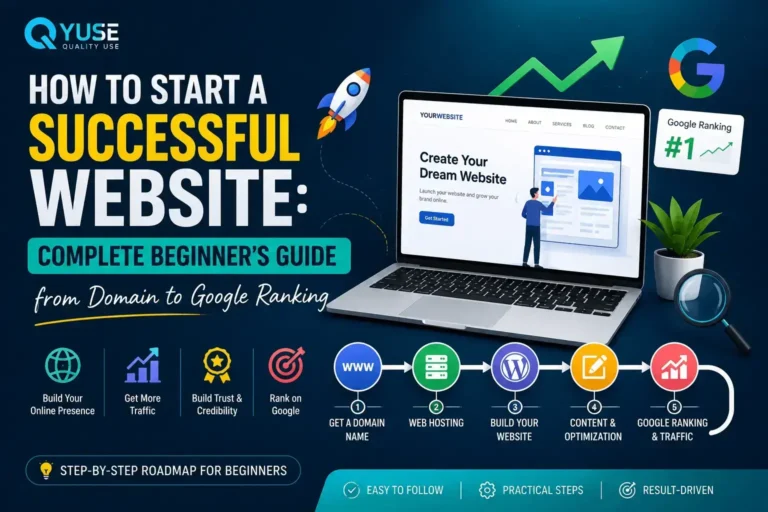

Learn how to start a Successful Blog in this complete beginner’s guide. Discover blogging strategies, SEO techniques, traffic growth methods, and monetization tips to build a profitable website.
Table of Contents
ToggleIntroduction
Blogging remains one of the most powerful ways to build an online presence, create a personal brand, share knowledge, and generate income. Despite the rise of social media and AI-powered platforms, blogs continue to attract billions of visitors from search engines every month.
Many people believe blogging is dead. The truth is the opposite. What has changed is the quality standard. Low-quality content struggles to rank, while helpful and well-optimized content continues to perform exceptionally well.
If you’re planning to start a blog in 2026, this guide will show you exactly how to build a successful website from scratch and grow it into a valuable digital asset.
Why Blogging Still Matters
A blog is something you own. Unlike social media platforms that can change their algorithms at any time, your website remains under your control.
Benefits of blogging include:
Building authority
Generating passive income
Growing a personal brand
Attracting clients and customers
Creating long-term digital assets
Receiving organic traffic from Google
A well-maintained blog can continue generating visitors for years.
Step 1: Choose the Right Niche
Your niche determines your audience and future opportunities.
Popular niches include:
Artificial Intelligence
Technology
Cybersecurity
Digital Marketing
Blogging
Personal Finance
Online Business
Health and Fitness
For Qyuse, focusing on AI, Technology, Cybersecurity, SEO, and Digital Business creates a strong foundation.
Avoid creating a website that covers too many unrelated topics.
Step 2: Register a Domain Name
Your domain is your online identity.
A good domain should be:
Easy to remember
Short and simple
Brandable
Easy to spell
Your existing domain, Qyuse.com, already has strong branding potential because it is unique and memorable.
Step 3: Choose Reliable Hosting
Website speed and reliability directly affect SEO.
When selecting hosting, consider:
Speed
Security
Customer support
Uptime
Scalability
A quality hosting provider improves user experience and search rankings.
Step 4: Install WordPress
WordPress powers a large percentage of websites on the internet.
Advantages include:
SEO-friendly structure
Thousands of plugins
Flexible customization
Strong community support
WordPress remains the best choice for most bloggers.
Step 5: Design Your Website Professionally
First impressions matter.
Important pages include:
Home
About Us
Contact
Privacy Policy
Terms and Conditions
Blog
Use a clean design that loads quickly and works well on mobile devices.
Step 6: Create High-Quality Content
Content is the foundation of blogging success.
Every article should:
Solve a problem
Answer questions
Provide useful information
Be easy to read
Be properly structured
Google rewards content that genuinely helps users.
Understanding Search Intent
Before writing any article, understand why someone is searching.
Common search intents include:
Informational
Navigational
Commercial
Transactional
Matching content to user intent improves rankings and engagement.
SEO Basics Every Blogger Must Know
Search Engine Optimization helps search engines understand your content.
Important elements include:
Keyword Research
Find keywords with:
Good search volume
Manageable competition
Clear search intent
Title Optimization
Include the primary keyword naturally in the title.
Meta Description
Write compelling descriptions that encourage clicks.
Heading Structure
Use:
H1
H2
H3
to organize content clearly.
Internal Linking
Link related articles together.
This improves navigation and SEO.
Writing Articles That Rank
Google increasingly focuses on content quality.
Best practices include:
Comprehensive Coverage
Cover topics in depth.
Original Insights
Add personal perspectives and examples.
Readability
Use short paragraphs and clear language.
Updated Information
Regularly refresh old articles.
Building Topical Authority
Topical authority means becoming a trusted source in a specific area.
For example:
If Qyuse focuses on AI and technology, create multiple related articles such as:
AI Tools
AI for Business
AI Image Generators
AI Productivity Tools
Future of AI
This helps search engines understand your expertise.
Growing Traffic Organically
Traffic growth takes time but becomes powerful when done correctly.
Methods include:
SEO
The most sustainable traffic source.
Social Media
Share content on relevant platforms.
Email Marketing
Build an audience you can reach directly.
Community Engagement
Participate in forums and discussions.
Content Consistency
Publish regularly.
Common Blogging Mistakes
Many new bloggers fail because they:
Publish low-quality content
Ignore SEO
Choose broad niches
Stop too early
Focus only on monetization
Patience is critical.
Most successful blogs take months to gain momentum.
How AI Helps Bloggers
AI tools can improve productivity.
Useful applications include:
Content research
Outline generation
Grammar checking
Keyword analysis
Content planning
However, human expertise remains essential.
AI should assist your workflow, not replace originality.
Monetization Methods
Once traffic grows, you can monetize through:
Affiliate Marketing
Promote useful products and services.
Display Advertising
Earn revenue through ad networks.
Sponsored Content
Partner with brands.
Digital Products
Sell ebooks, templates, or courses.
Consulting
Offer professional services.
Diversifying income sources creates greater stability.
Building Trust with Readers
Trust is one of the most important assets in blogging.
Ways to build trust include:
Accurate information
Transparency
Consistency
Helpful content
Honest recommendations
Websites that prioritize users tend to perform better long-term.
Creating a Content Strategy
A content strategy prevents random publishing.
Plan content around:
Keywords
Audience needs
Seasonal opportunities
Industry trends
Publishing strategically produces better results.
The Importance of Website Speed
Slow websites lose visitors.
Improve performance by:
Compressing images
Using caching
Choosing quality hosting
Minimizing unnecessary plugins
Speed affects both user experience and SEO.
Cybersecurity for Bloggers
Protect your website by:
Using strong passwords
Updating plugins
Enabling backups
Installing security tools
Security issues can damage rankings and reputation.
Future of Blogging
Blogging continues evolving.
Future trends include:
AI-assisted content creation
Better user experience signals
Voice search optimization
More personalized content
Despite technological changes, valuable content remains the key to success.
Reaching Your First 10,000 Visitors
Most successful blogs grow gradually.
Focus on:
Consistent publishing
SEO optimization
High-quality content
Audience engagement
Small improvements compound over time.
Final Thoughts
Starting a blog in 2026 remains one of the best ways to build an online presence, share knowledge, and create income opportunities.
Success doesn’t happen overnight.
It comes from consistently publishing helpful content, understanding your audience, optimizing for search engines, and continuously improving your website.
For a platform like Qyuse, the combination of AI, Technology, Cybersecurity, SEO, and Digital Business creates significant long-term growth potential.
The best time to start was yesterday. The second-best time is today for Successful Blog.
Power your digital journey with carefully selected AI tools, hosting solutions, productivity software, and growth resources recommended by Qyuse with Successful Blog.