

Avoid costly domain problems with this guide to Common Domain Registration Mistakes to Avoid, including renewal, privacy, DNS, and ownership errors.
Registering a domain is simple, but one small mistake can lead to lost ownership, unexpected costs, security risks, or website downtime. This guide explains the most common domain registration mistakes to avoid and how to register, secure, manage, and renew your domain correctly.
Informational with commercial investigation intent.
Searchers primarily want to learn how to avoid mistakes when buying and managing a domain name. Some readers will also compare domain registrars and hosting providers before registering a domain or launching a website.
Common Domain Registration Mistakes to Avoid include choosing the wrong domain name, using incorrect ownership information, ignoring renewal dates, skipping privacy protection, selecting a registrar only because of a low introductory price, and failing to secure your account. Carefully managing ownership, DNS, security, and renewals helps protect your website and brand.
Table of Contents
ToggleIntroduction
Buying a domain name may look like one of the easiest steps in launching a website. You search for a name, find an available extension, pay for it, and assume everything is complete. However, Common Domain Registration Mistakes to Avoid can create serious problems long after the initial purchase.
A simple error can cause a domain to expire, make a website temporarily unavailable, expose personal information, complicate a domain transfer, or even create a dispute over who actually owns the domain.
For bloggers, businesses, developers, affiliate marketers, and WordPress users, a domain is more than a web address. It is a digital asset connected to your brand, website, email, marketing campaigns, search visibility, and customer trust.
The good news is that most domain problems are preventable.
In this detailed guide, you will learn the Common Domain Registration Mistakes to Avoid, why they happen, and the practical steps you can take to register and manage your domain correctly. You will also learn how to choose a registrar, protect your domain account, manage renewals, configure DNS safely, and select suitable hosting for your website.
Whether you are registering your first .com domain or managing multiple websites, these recommendations can help you avoid expensive and frustrating mistakes.
What Are the Most Common Domain Registration Mistakes to Avoid?
The most common domain registration mistakes happen because people focus only on finding an available name and completing the checkout process. In reality, domain registration involves several important decisions:
- Choosing the right domain name
- Selecting an appropriate extension
- Choosing a reliable registrar
- Understanding renewal pricing
- Protecting ownership information
- Configuring DNS correctly
- Securing the registrar account
- Planning for future transfers and website growth
A domain can remain an important business asset for years. Therefore, spending a few extra minutes reviewing the registration process can save considerable time and money later.
The following mistakes are especially important for new website owners.
Why Domain Registration Mistakes Can Be Expensive
A domain registration problem does not always appear immediately.
For example, you may accidentally register a domain using an old email address. Everything works perfectly for two years. Then, when the domain expires or requires verification, you cannot access the email account connected to the registrar.
Another website owner may choose a registrar because the first-year price is extremely low, only to discover that the renewal price is significantly higher.
Other problems can be even more serious:
- Your domain expires while your website is generating revenue.
- An employee registers the company domain using a personal account.
- Someone gains access to the registrar account and changes DNS settings.
- Incorrect nameservers cause website or email downtime.
- A trademark issue forces a costly domain change.
- A transfer becomes difficult because account information is outdated.
These situations explain why understanding Common Domain Registration Mistakes to Avoid is essential before clicking the purchase button.
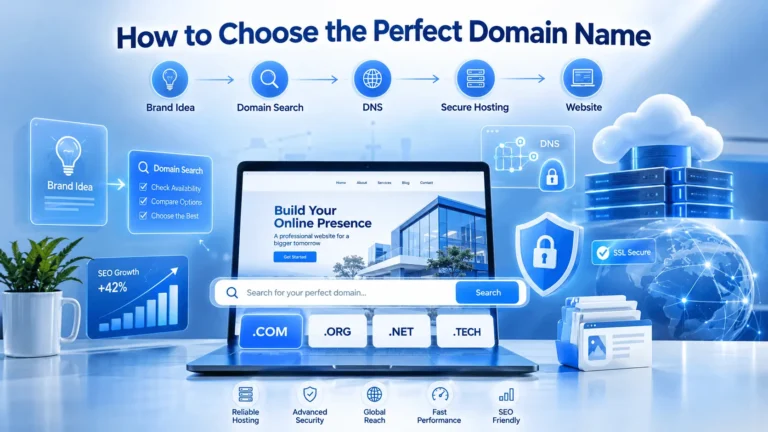
Mistake #1: Choosing the Wrong Domain Name
One of the biggest mistakes when registering a domain is rushing the naming process.
A domain name should be:
- Easy to remember
- Easy to spell
- Easy to pronounce
- Relevant to your brand or website
- Short enough to type comfortably
- Flexible enough for future growth
Avoid overly complicated names
Consider these examples:
Difficult:best-affordable-online-web-hosting-solutions-2026.com
Better:examplehosting.com
The second option is easier to remember, share, and use in marketing.
Avoid unnecessary numbers and hyphens
Numbers can create confusion because people may not know whether to type the numeral or spell the number.
Similarly, multiple hyphens can make a domain look less trustworthy and harder to remember.
Expert Tip
Before registering a domain, say it aloud to another person. If they cannot spell it correctly after hearing it once, consider simplifying it.
This is one of the simplest Common Domain Registration Mistakes to Avoid, yet it can have a long-term effect on branding.
Mistake #2: Ignoring the Right Domain Extension
Many beginners immediately choose the cheapest available extension without considering its purpose.
The domain extension, also known as the top-level domain or TLD, is the part after the domain name:
.com.net.org.io.co- Country-specific extensions such as
.bd
For many commercial websites, .com remains familiar and widely recognized. However, other extensions can also be appropriate depending on the project.
A simple extension guide
| Extension | Often Suitable For |
|---|---|
| .com | Businesses, blogs, general websites |
| .org | Organizations and communities |
| .net | Technology and network-related projects |
| .io | Technology startups and software projects |
| Country TLD | Local businesses and regional audiences |
Do not choose an extension simply because it has the lowest registration price.
Think about your audience, brand, future plans, and whether visitors may accidentally type a different extension.
Mistake #3: Choosing a Registrar Based Only on the First-Year Price
Low introductory pricing can be attractive. However, the initial registration cost is only one part of domain ownership.
Before choosing a registrar, check:
- First-year registration price
- Renewal price
- Transfer fee
- WHOIS privacy availability
- DNS management tools
- Security features
- Customer support
- Account recovery options
- Additional charges
A $1 first-year promotion may sound excellent, but the renewal cost could be considerably higher.
What to compare before buying
| Feature | Why It Matters |
|---|---|
| Registration Price | Your initial cost |
| Renewal Price | Your long-term cost |
| Privacy | Helps protect public contact information |
| DNS Tools | Needed to connect hosting and services |
| Security | Protects against unauthorized access |
| Support | Helpful when technical problems occur |
| Transfer Policy | Important if you change providers |
A registrar should provide a balance between price, usability, security, and reliable account management.
For users looking for a domain and hosting ecosystem, Namecheap can be worth comparing with other providers based on your specific requirements.
Mistake #4: Registering the Domain Under the Wrong Person or Email
This is one of the most dangerous domain ownership mistakes.
Imagine a company asks a developer to build a website. The developer registers the domain using:
- Their personal email
- Their personal phone number
- Their own payment method
- Their own registrar account
Years later, the company changes developers. The business may then struggle to access or transfer its own domain.
Best practice for businesses
The domain should be registered using an account controlled by the business.
For example:
- Business-controlled email address
- Authorized company administrator
- Documented registrar login
- Secure password manager
- Clear ownership records
Never assume that having access to the website hosting account automatically means you own the domain.
Domain ownership and web hosting are separate services.
This distinction is crucial when learning about Common Domain Registration Mistakes to Avoid.
Mistake #5: Entering Incorrect Contact Information
Domain registration requires registrant contact details. Incorrect information can create verification and recovery problems.
Review the following carefully:
- Registrant name
- Organization name
- Email address
- Phone number
- Mailing information where required
The email address is particularly important because registrars may send:
- Verification requests
- Renewal notices
- Security alerts
- Transfer confirmations
- Account recovery instructions
Use an email address you expect to maintain for the long term.
Avoid registering a valuable business domain with a temporary email account.
The Internet Corporation for Assigned Names and Numbers (ICANN) provides information about the domain name system and registration policies.
Mistake #6: Forgetting Domain Privacy Protection
Historically, domain registration details could expose registrant information through WHOIS records, although the visibility of data now depends on privacy rules, registry policies, and registrar practices.
Privacy protection can help reduce exposure of personal contact information.
Benefits may include:
- Reduced spam
- Better privacy
- Less unwanted contact
- Separation between personal and public information
However, you should understand exactly what privacy service your registrar provides and whether there are additional costs.
Privacy protection is not a replacement for strong account security.
You still need:
- A unique password
- Two-factor authentication
- Updated recovery information
- Domain lock where available
Mistake #7: Ignoring Renewal Dates
Domain expiration can create immediate problems.
If your domain expires, visitors may be unable to reach your website. Business email connected to the domain may also be affected.
For a website that receives organic traffic, runs advertisements, or generates affiliate revenue, downtime can be expensive.
Create a renewal strategy
At minimum:
- Enable renewal notifications.
- Use an active email address.
- Add a calendar reminder.
- Enable auto-renewal when appropriate.
- Keep a valid payment method available.
- Review renewal pricing before the renewal date.
A domain should be treated like any other important digital asset.
Ignoring renewals is one of the easiest Common Domain Registration Mistakes to Avoid, but it remains surprisingly common.
Mistake #8: Not Enabling Auto-Renewal
Auto-renewal can protect against accidental expiration.
However, it should not be enabled blindly.
Before relying on auto-renewal, make sure:
- Your payment method is current.
- Your registrar account remains accessible.
- Renewal pricing is acceptable.
- You still want to keep the domain.
Pros and Cons of Auto-Renewal
| Pros | Cons |
|---|---|
| Reduces accidental expiration | Can renew unwanted domains |
| Helps protect important websites | Requires an active payment method |
| Useful for business-critical domains | Renewal prices may change |
| Convenient | Account access still needs protection |
For valuable domains, auto-renewal plus manual reminders provides an additional layer of protection.
Mistake #9: Failing to Secure the Domain Registrar Account
Your domain registrar account controls one of the most important parts of your online presence.
If an attacker gains access, they may attempt to:
- Change DNS records
- Redirect your website
- Intercept domain-related services
- Initiate unauthorized changes
- Lock you out of your own account
Essential domain security steps
1. Use a unique password
Do not reuse the same password from another website.
2. Enable two-factor authentication
Two-factor authentication adds another barrier beyond the password.
3. Protect your email account
Your domain account recovery may depend on your email address.
4. Enable domain lock
Use registrar locking features where appropriate to reduce unauthorized transfers.
5. Review account activity
Check for unexpected DNS or contact changes.
Security is a major part of understanding Common Domain Registration Mistakes to Avoid because a perfectly chosen domain is still vulnerable if the account controlling it is poorly protected.
Mistake #10: Misconfiguring DNS and Nameservers
DNS configuration connects your domain to other services.
Depending on your setup, DNS records may control:
- Your website
- Business email
- Subdomains
- Verification services
- Security services
- Content delivery networks
A small mistake can cause your website or email to stop working.
Common DNS mistakes
- Replacing existing nameservers without checking current services
- Deleting important MX records
- Using incorrect A records
- Creating duplicate records
- Forgetting DNS propagation time
- Changing records without keeping a backup
Before changing DNS
Create a record of the current configuration.
You can save:
- Nameservers
- A records
- CNAME records
- MX records
- TXT records
If something goes wrong, this information can make recovery much easier.
For broader website performance and technical guidance, web.dev provides useful resources from Google’s web development ecosystem.
Mistake #11: Buying Hosting Before Checking Your Requirements
A domain and hosting service work together, but they solve different problems.
Your domain is the address people type.
Your hosting provides the infrastructure where your website files, databases, and applications operate.
Before choosing hosting, consider:
- Website platform
- Expected traffic
- Storage requirements
- Performance needs
- Security features
- Backup options
- WordPress compatibility
- WooCommerce requirements
- Technical support
For beginners
A simple managed or beginner-friendly hosting plan may be enough.
👉 Start with Hostinger:
https://qyuse.com/hostinger
For WordPress users
A WordPress-focused hosting environment may provide easier setup and management.
👉 Get Bluehost:
https://qyuse.com/bluehost
For growing websites
Business and developer-focused users may need more flexibility, performance, and support.
👉 Explore InMotion Hosting:
https://qyuse.com/inmotionhosting
The key is to select hosting based on your actual website requirements rather than simply choosing the lowest advertised price.
Mistake #12: Registering a Name That Creates Trademark Problems
Before investing in branding, content, advertising, and website development, research the name you plan to use.
Do not assume that an available domain automatically means the name is legally safe to use.
A domain may be available while the same or a similar name is protected by trademark rights.
Before registration, consider:
- Existing businesses
- Registered trademarks
- Brand confusion
- Industry relevance
- Geographic markets
For a valuable business project, professional legal advice may be appropriate.
A rebrand can be expensive because it may require changes to:
- Website URLs
- Social profiles
- Email addresses
- Marketing materials
- Printed products
- Search engine visibility
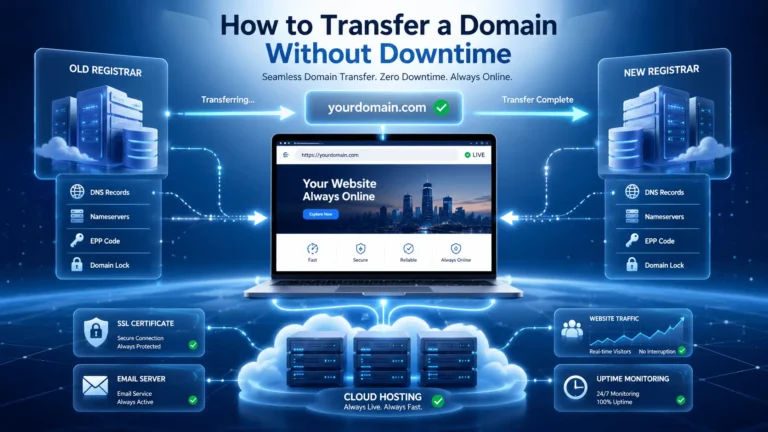
Mistake #13: Not Understanding Domain Transfers
You may eventually want to move your domain to another registrar.
Before starting, understand:
- Transfer eligibility requirements
- Domain lock status
- Authorization or transfer codes
- Contact information requirements
- Renewal implications
- Potential transfer restrictions after registration or recent changes
Do not begin a transfer immediately before a critical campaign or website launch.
Plan the process carefully and keep access to both the current registrar account and the email associated with the domain.
Mistake #14: Buying Too Many Unnecessary Add-Ons
During checkout, registrars may offer additional products.
Some can be genuinely useful, while others may not be necessary for your current project.
Potential services may include:
- Hosting
- SSL certificates
- Website builders
- Privacy protection
- Premium DNS
- Security services
The best approach is to understand what each product does before purchasing it.
For example, SSL can be important for securing website connections. However, some hosting plans may already include SSL options, including certificates from providers such as Let’s Encrypt.
Avoid paying twice for services you already have.
👉 Buy SSL Certificate:
https://qyuse.com/ssls
Mistake #15: Failing to Keep Domain Ownership Records
If you manage several domains, keeping records becomes increasingly important.
Create a secure domain inventory containing:
- Domain name
- Registrar
- Registration date
- Renewal date
- Account owner
- Administrative email
- Nameservers
- Hosting provider
- Auto-renewal status
Do not store passwords in an unsecured spreadsheet. Use a reputable password manager for sensitive credentials.
A simple domain inventory can prevent confusion when managing multiple websites or working with a team.
Expert Domain Registration Checklist
Before completing your purchase, review this checklist:
Is the domain easy to spell?
Is it easy to remember?
Does the extension fit the project?
Have you checked the renewal price?
Is the registrant email correct?
Is the domain account controlled by the actual owner?
Is privacy protection available or appropriate?
Have you enabled strong account security?
Is auto-renewal configured appropriately?
Have you recorded the expiration date?
Have you checked for potential trademark conflicts?
Do you understand how the domain will connect to hosting?
Have you avoided unnecessary checkout add-ons?
Following this checklist addresses many of the Common Domain Registration Mistakes to Avoid before they become real problems.
How to Choose the Right Domain Registrar and Hosting Provider
Choosing a domain registrar and choosing hosting are separate decisions, although many providers offer both services.
A good registrar should provide:
Transparent pricing
Easy DNS management
Strong account security
Reliable customer support
Clear transfer procedures
Convenient domain management tools
A good hosting provider should match your website’s requirements.
For example, a small personal blog does not necessarily need the same infrastructure as a growing WooCommerce store.
Quick Provider Overview
| Provider | Primary Strength | Consider It For |
|---|---|---|
| Namecheap | Domains and broad web services | Domain registration and website projects |
| Hostinger | Beginner-friendly hosting | New websites and bloggers |
| Bluehost | WordPress-focused ecosystem | WordPress beginners |
| WebHostingHub | Traditional web hosting approach | Smaller website projects |
| InMotion Hosting | Broader hosting options | Businesses and developers |
Hosting Comparison Table
| Provider | Starting Price* | Performance | Storage | Free Domain | SSL | Support | Best For | Rating |
|---|---|---|---|---|---|---|---|---|
| Namecheap | Varies by service | Good for standard sites | Plan dependent | Plan dependent | Available | 24/7 options | Domains and general web projects | 4.5/5 |
| Hostinger | Promotional pricing varies | Strong value for many websites | Plan dependent | Available on eligible plans | Available on eligible plans | 24/7 support options | Beginners and bloggers | 4.6/5 |
| Bluehost | Promotional pricing varies | Suitable for WordPress projects | Plan dependent | Available on eligible plans | Included/available by plan | 24/7 support options | WordPress beginners | 4.5/5 |
| WebHostingHub | Pricing varies | Suitable for standard hosting | Plan dependent | Plan dependent | Available | Support options vary | Basic website hosting | 4.2/5 |
| InMotion Hosting | Promotional pricing varies | Strong options for growing sites | Plan dependent | Available on eligible plans | Available/included by plan |
Best Value for Domain Registration
If your primary goal is registering and managing domains, Namecheap is a natural option to compare because of its established focus on domain services.
👉 Register with NamecheapBest for New Website Owners
For users who want an accessible hosting experience and an easy starting point, Hostinger may be worth considering.
👉 Start with HostingerBest for WordPress Beginners
Bluehost can be a suitable option for users who want a straightforward WordPress-focused hosting experience.
👉 Get BluehostBest for Growing Projects
InMotion Hosting may be worth considering for users who expect greater flexibility as their websites develop.
👉 Explore InMotion HostingRecommendations by User Type
Best Hosting for Beginners: Hostinger
Beginners generally benefit from:
- Simple control panels
- Guided setup
- Affordable entry pricing
- Easy WordPress installation
- Basic security features
Hostinger can be a practical starting point for users launching their first website.
👉 Start with Hostinger: https://qyuse.com/hostinger
Pros
- Beginner-friendly approach
- Broad hosting options
- Suitable for small and medium websites
Cons
- Promotional pricing and renewal pricing should be reviewed carefully
- Features vary by plan
Best Hosting for WordPress: Bluehost
WordPress users should prioritize:
- Easy installation
- Reliable updates
- SSL support
- Backups
- Security features
- Suitable performance
Bluehost can be considered by users who prefer a WordPress-focused hosting ecosystem.
👉 Get Bluehost: https://qyuse.com/bluehost
Pros
- Beginner-friendly WordPress setup
- Broad recognition in the WordPress hosting market
- Suitable for new WordPress users
Cons
- Plan features and renewal costs should be reviewed before purchase
- Higher-tier projects may require more specialized resources
For WordPress software and official documentation, visit WordPress.org.
Best Hosting for WooCommerce: InMotion Hosting
WooCommerce websites often require more resources than a basic blog.
Consider:
- Faster storage
- Reliable uptime
- Database performance
- Security
- Backup options
- Scalability
InMotion Hosting may be worth evaluating for growing online stores, depending on the selected plan and expected traffic.
👉 Explore InMotion Hosting: https://qyuse.com/inmotionhosting
Best Hosting for Businesses: InMotion Hosting
Business websites should prioritize long-term reliability over the cheapest possible introductory price.
Look for:
- Strong support
- Backup features
- Security options
- Scalability
- Performance
- Business email compatibility
A growing company should also document who controls its domain and hosting accounts. This prevents one of the most serious Common Domain Registration Mistakes to Avoid: losing control of critical digital assets when employees, agencies, or developers change.
Best Hosting for Bloggers: Hostinger
Bloggers usually need:
- Easy WordPress installation
- Affordable hosting
- SSL
- Good page speed
- Room for traffic growth
Hostinger may be suitable for bloggers who want a practical balance between simplicity and hosting resources.
Best Hosting for Developers: InMotion Hosting
Developers may prioritize:
- Greater server control
- Development tools
- Flexible hosting environments
- Scalability
- Advanced configurations
InMotion Hosting can be worth comparing for users who need more than a basic shared hosting environment.
Real-World Domain Registration Use Cases
Use Case 1: A Blogger Launching a First Website
A new blogger wants to create a personal technology website.
A sensible process could be:
- Choose a short and memorable domain.
- Check the renewal price before purchasing.
- Register the domain under an email account they control.
- Enable account security.
- Choose hosting appropriate for expected traffic.
- Install WordPress.
- Configure SSL.
- Keep a record of renewal dates.
The most important lesson is not to choose every service based only on the cheapest first-year offer.
Use Case 2: A Business Hiring a Web Developer
A company hires a freelancer to create its website.
The company should control:
- Domain registrar account
- Hosting account
- Primary administrative email
- Payment information
- Website backups
- DNS access
The developer can receive the required technical access without becoming the permanent owner of the domain.
This approach reduces ownership disputes in the future.
Use Case 3: An Affiliate Website With Multiple Domains
An affiliate marketer manages several niche websites.
The risk increases when:
- Renewal dates are different
- Domains use multiple registrars
- Contact emails are outdated
- Account credentials are poorly documented
A domain inventory and secure credential management system can significantly reduce mistakes.
Pros and Cons of Registering Domain and Hosting Together
Some providers allow you to purchase both the domain and hosting from one company.
Pros
- Easier setup
- Fewer accounts to manage
- Simple DNS configuration
- Convenient billing
- Beginner-friendly
Cons
- Moving services later may require additional planning
- You may miss a better domain price elsewhere
- An account problem could affect multiple services
- Less separation between critical services
There is no universal right answer.
For beginners, keeping domain and hosting together can simplify setup. For businesses and experienced users, separating them may provide additional flexibility.
The important point is understanding the trade-offs before making a decision.
Expert Tips for Avoiding Domain Problems
1. Register important domains for more than one year if appropriate
Longer registration periods can reduce the risk of accidental expiration, although you should still monitor renewal dates.
2. Use a business-controlled email
Do not depend on an employee’s personal email for a valuable company domain.
3. Keep DNS documentation
Before changing nameservers or records, create a backup of the current configuration.
4. Enable multi-factor authentication
Your domain registrar account should receive the same level of protection as other important online accounts.
5. Review renewal costs
The introductory price is temporary. Understand the long-term cost.
6. Do not ignore registrar emails
Security, verification, and renewal messages can be important.
7. Keep your domain separate from temporary service providers
You should always know exactly where your domain is registered and who controls it.
These practical habits help prevent many Common Domain Registration Mistakes to Avoid throughout the life of your website.
Frequently Asked Questions
1. What are the most common domain registration mistakes?
Common mistakes include choosing a difficult domain name, using incorrect ownership information, ignoring renewal dates, selecting a registrar based only on introductory pricing, skipping security features, and misconfiguring DNS.
2. Should I enable auto-renewal for my domain?
For important domains, auto-renewal can reduce the risk of accidental expiration. However, you should also maintain valid payment details and monitor renewal notifications.
3. Is domain privacy protection necessary?
Privacy protection can help limit public exposure of personal contact information where available and applicable. Check your registrar’s specific privacy service and current policies.
4. Can I transfer my domain to another registrar?
In many cases, yes. However, eligibility requirements and restrictions may apply. Check your current registrar’s transfer rules before starting the process.
5. What happens if my domain expires?
Your website, email, or other services connected to the domain may be affected. Recovery options and timelines depend on the registrar, registry, and domain extension.
6. Should I buy domain and hosting from the same company?
It can simplify setup for beginners, but it is not required. Compare pricing, features, security, and long-term flexibility.
7. Is the cheapest domain registrar always the best choice?
No. Consider renewal pricing, security features, privacy options, DNS tools, customer support, and transfer policies.
8. How do I know who owns my domain?
Log in to the registrar account and review the registrant or account ownership information. For business domains, ensure the account is controlled by the business rather than an individual contractor.
9. Should I register multiple domain extensions?
It depends on your brand protection strategy and budget. You may choose to register important variations, but avoid buying unnecessary domains without a clear purpose.
10. What is the best way to secure a domain name?
Use a unique password, enable two-factor authentication, secure your recovery email, enable domain lock where appropriate, keep contact information current, and monitor important account changes.Conclusion: Register Your Domain Carefully From Day One
A domain name may take only a few minutes to register, but the decisions you make during that process can affect your website for years.
The Common Domain Registration Mistakes to Avoid include choosing a poor domain name, selecting a registrar based only on introductory pricing, using the wrong ownership information, forgetting renewal dates, ignoring account security, misconfiguring DNS, and failing to understand how your domain connects to hosting.
The best approach is simple: treat your domain as an important digital asset.
Before registering, choose a memorable name, check the renewal cost, use accurate ownership details, secure your account, and create a clear renewal strategy. Once your domain is connected to hosting, document important DNS settings and keep control of all critical accounts.
For a new website, you can start by comparing a domain-focused provider such as Namecheap with hosting providers based on your actual requirements.
Ready to Register Your Domain?
👉 Register with NamecheapReady to Launch Your Website?
👉 Start with HostingerBuilding a WordPress Website?
👉 Get BluehostNeed More Hosting Flexibility?
👉 Explore InMotion HostingThe right domain and hosting setup can give your website a stronger foundation. Take a few extra minutes before registering, and you can avoid many costly problems later.
Internal Linking Suggestions for QYUSE
- How to Choose the Perfect Domain Name
choose the right domain name - Best Domain Registrars Compared
compare the best domain registrars - .COM vs .NET vs .ORG: Which Should You Choose?
choose the right domain extension - How to Transfer a Domain Without Downtime
transfer a domain safely - Difference Between Domain and Hosting
understand the difference between a domain and hosting - How to Choose the Right Hosting for Your Website
choose the right hosting plan - Best Cheap Hosting Under $5/Month
affordable hosting options - Shared Hosting vs VPS Hosting Explained
shared hosting versus VPS hosting
External Authority Links
Use these naturally within the article as relevant DoFollow references:
- ICANN — Domain registration and DNS policy information.
- WordPress.org — WordPress software and documentation.
- Google Search Central — Search and website optimization guidance.
- Let’s Encrypt — Information about TLS/SSL certificates.
- web.dev — Website performance and development best practices.